Senior School newsletter – 18 September 2026
Issue 1/2026/27
Headmaster’s reflections
AI at Kimbolton
“Why don’t you just ask AI?” is a response that I seem to be giving to my family at home regularly.

One of my children used EcoGP yesterday to diagnose and fix a problem with their laptop (which I had no idea about); we’ve used ChatGPT to plan a family trip at half-term, saving hours of dull internet research; Copilot helps me provide analysis into the independent education sector to brief colleagues… and the list goes on. I find it impossible not to marvel at what an incredibly useful and versatile invention artificial intelligence is to solve problems, provide insight and boost productivity.
Yet this all comes with a caveat created by the pace of its development, its awesome power, and consequent fears about what it may or may not do to human intelligence and safety. In the last week, the 1950s sci-fi element has been stepped up, with headlines shouting that AI could ‘wipe out humanity’. As with most things – especially in the education of children – balance is the key.
Most young people I talk to at school are using AI tools regularly and have an instinctive sense of the quality of generated content, tapping into that teenage superpower: cynicism. This is not a failsafe critical gatekeeper, of course, and the temptation to use it instead of thinking (rather than to support it) is strong for a generation raised on instant gratification. Clearly, schools play an important role in helping them learn to use it well, without plagiarising others’ work or cutting corners in their learning, and taking shortcuts to understanding, and in achieving that balance that we are after.
The reality is that children across the UK are using AI often without guidance, and not always in ways that serve their learning. Whereas 66.5% of UK 13–18-year-olds report using AI regularly, only 15% of them feel they’ve had meaningful guidance on it from their school. Every Head I meet is grappling with the same issues. A meaningful approach is challenging to establish: by the time a policy is worked through and adopted, the AI model it was written for may already be out of date. The result is a widening gap between how learners are using these tools and how ready schools are to respond.
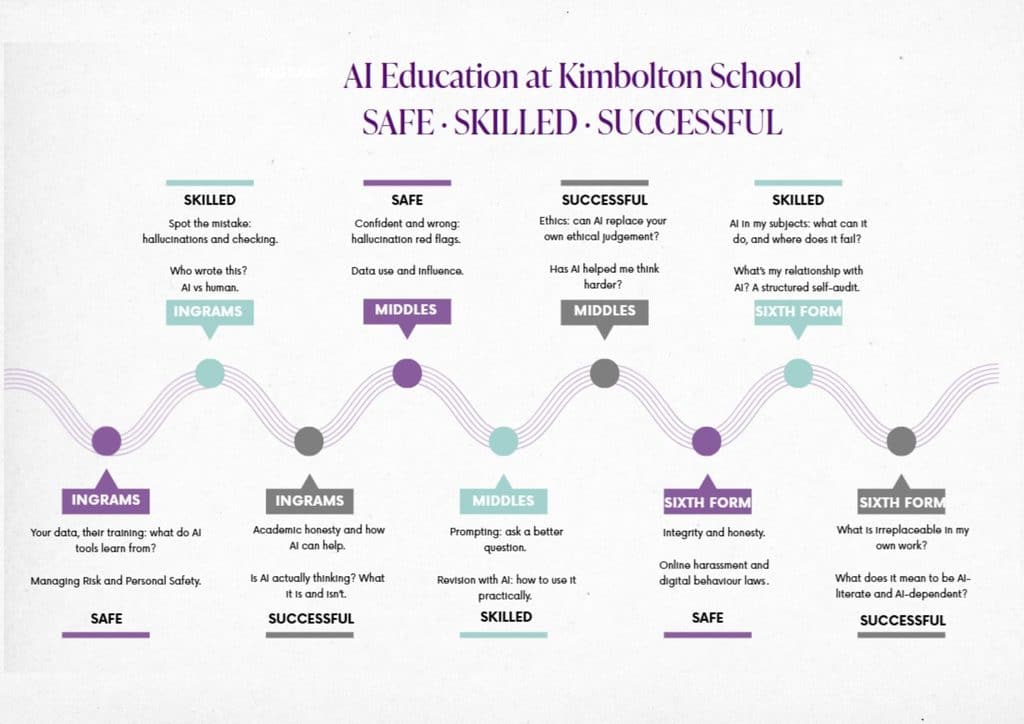
Consequently, I am delighted that we have introduced a new, comprehensive AI learning programme that synthesises our educational principles with the current landscape of AI and its potential for children’s learning. It will equip pupils to engage with it confidently, responsibly and effectively. It works around three fundamental principles: that children will become Safe in their understanding of AI, Skilled in their application of it, and Successful in a world increasingly shaped by it.
I urge all parents to read our Assistant Head – Teaching, Mr Chipperton’s guide to Learning with AI at Kimbolton in this newsletter. As ever, please do contact us if you would like to discuss any aspect of it.
Have a wonderful weekend,
Will Chuter
Headmaster
“Our aim is for pupils to become safe in their understanding of AI, skilled in its application, and successful in a world increasingly shaped by it.”

Will Chuter
Headmaster
Whole school updates
Artificial Intelligence education – Learning with AI at Kimbolton
This year we have introduced a comprehensive AI learning programme across the school that equips pupils to engage with AI confidently, responsibly and effectively. Our ambition is to develop young people who are Safe in their understanding, Skilled in their application, and Successful in navigating a world increasingly shaped by artificial intelligence.
How will my child gain from it
They will develop a clear understanding of how AI works, its opportunities and limitations, and the ethical considerations that accompany its use. They will learn how to use AI safely and responsibly, evaluate AI-generated content critically, recognise potential risks such as bias and misinformation, and uphold the highest standards of academic integrity. Alongside this, they will develop the practical skills needed to use AI productively to support learning, research, problem-solving and creativity.
Sessions will be delivered through our PSHE programme, tutorial curriculum and the Sixth Form Super-Curriculum, as well as in Integrated Learning Days and cross-curricular opportunities. By embedding AI education throughout the learning experience, we aim to ensure that every pupil is not only knowledgeable about it, but also capable of using it with judgement, creativity and purpose.
How are we empowering pupils?
Further to this, we aim to empower students to use AI academically with purpose, honesty and critical judgement. The challenge AI presents to education is not primary about cheating, although academic dishonesty is one dimension. The deeper issue is cognitive. When pupils use AI to do the thinking for them they bypass the very struggle that builds genuine understanding and long-term capability. Two significant studies published in 2025 found that while AI improved short-term performance, that improvement was entirely reversed when access to AI was removed. Pupils had not learned – they had borrowed knowledge.
At the same time, AI is genuinely transforming the skills that employers and further education value. Those who leave school unable to use AI critically and confidently will be at a disadvantage. The answer is not to prohibit the use of AI, but to teach pupils when to utilise it, and how to use it well.
The ‘Learning with AI’ framework is our response to these realities. It provides pupils – and their teachers – with clear, consistent guidelines on how AI should be used for academic purposes at school and beyond. Technology should serve the learner and learning, rather than replace it.
How does this work?
Every learning opportunity will carry one of four AI levels, indicated by a member of the teaching staff. For home learning and independent learning tasks, the level will appear within the relevant Microsoft Team assignment, so your child will always know exactly what is expected.
How will this be delivered?
Through our PSHE programme, tutorial curriculum and the Sixth Form Super-Curriculum, as well as in Integrated Learning Days and cross-curricular opportunities. By embedding AI education throughout the pupil experience, we aim to ensure that every pupil is not only knowledgeable about it, but also capable of using it with judgement, creativity and purpose.
What should parents look for regarding home learning?
Every assignment in Teams will include an AI level tag. If your child is unsure which level applies to a set task, they should check the assignment description or ask their teacher. If no tag is shown, they should treat the task as Level 4 and ask before using any AI tools.
How can you help your child?
The framework asks pupils to commit to five principles. Understanding these can help support your child at home.
- Use AI purposefully: your child should be able to explain why they are using an AI tool, and what they are trying to get from it. Aimless or habitual use – opening Copilot or ChatGPT before they have tried themselves – is exactly what the framework seeks to prevent.
- Be transparent: if your child has used AI in their work, they should say so. This can be done so on the work itself, or attached to their submission in Teams. Honesty about process is as important as honesty in the work itself.
- Check everything: AI produces confident-sounding output that is frequently wrong. Your child is responsible for every fact, figure and claim in work they submit, regardless of where they obtained it. Encourage them to verify AI-generated information using a second source.
- Protect independence: some difficulty in studying is productive and desirable. It is where real understanding is built. If your child finds a task difficult, the answer is rarely to ask AI to do it for them. Encourage them to try first, ask their teacher if stuck, and use AI only in the way their task permits.
- Keep safe: personal details, exam content, and anything confidential must never be typed into an AI tool. These are commercial platforms whose data practices vary. Personal information should be protected.
Frequently asked questions
My child says they need to use AI for their homework. Is that right?
It depends on the level assigned to the task. If the task is Level 1 or 2, AI is permitted. However, it still needs to be acknowledged. If the task is Level 3 or 4, AI should not be used to produce any of the submitted work. Encourage your child to check their Teams assignment for the AI level, and to ask their teacher if they are unsure.
What if I’m helping my child with homework and I use AI?
The same principles apply. Parental support that involves generating or writing content with AI – even with the best of intentions – undermines the purpose of the task and your child’s learning. If your child is stuck, the most helpful thing is to encourage them to attempt it, speak to their teacher, or use AI only in the way the task level allows: for understanding, not answers.
Isn’t AI detection software used to catch cheating?
The school’s approach does not rely solely on AI detection tools. These tools, although available and used in some circumstances, are not always reliable. Instead, we focus on assessment design: tasks that require genuine process, knowledge, and reflection that AI cannot replicate. In cultivating a culture of transparency, we hope that pupils will be honest about how they have worked.
Will my child fail if they are not allowed to use AI freely?
The opposite is more likely to be true. Research consistently shows that pupils who develop strong independent thinking and writing skills – alongside critical AI literacy – are better prepared for university and employment than those who rely on AI as a crutch. The four-level framework is designed to give pupils both genuine independent capability alongside the skills to use AI thoughtfully and effectively.
What if my child uses AI in a way that breaks the rules?
The school’s curriculum policy includes academic integrity, plagiarism and AI misuse. Where a concern arises, the first step is a conversation with the pupil, offering them an opportunity to explain their work. If there is reasonable evidence of AI misuse, consequences are proportionate, and the emphasis is on learning and accountability. If you have a concern about your child’s AI use at home, their tutor should be the first point of contact.
The Ian Knapp Fitness Suite
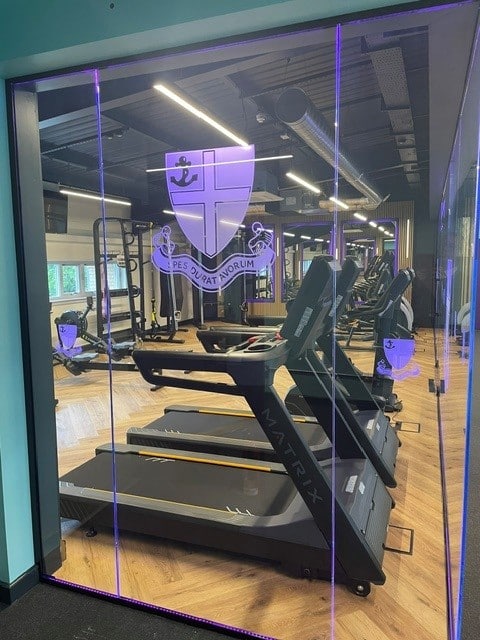
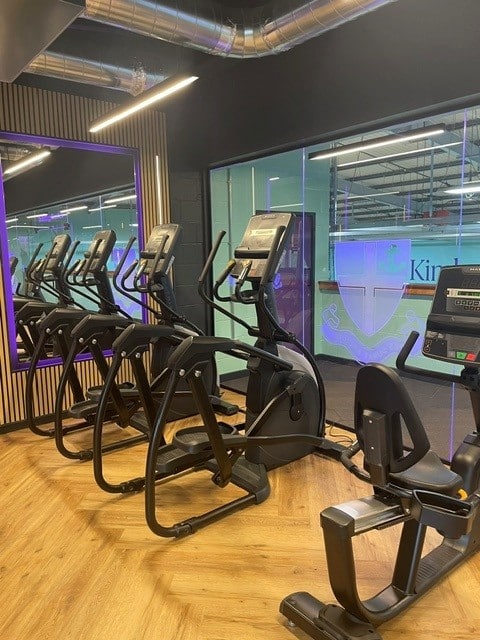
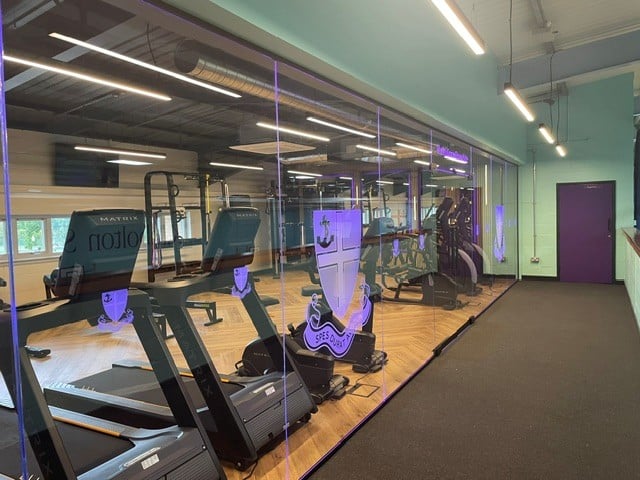
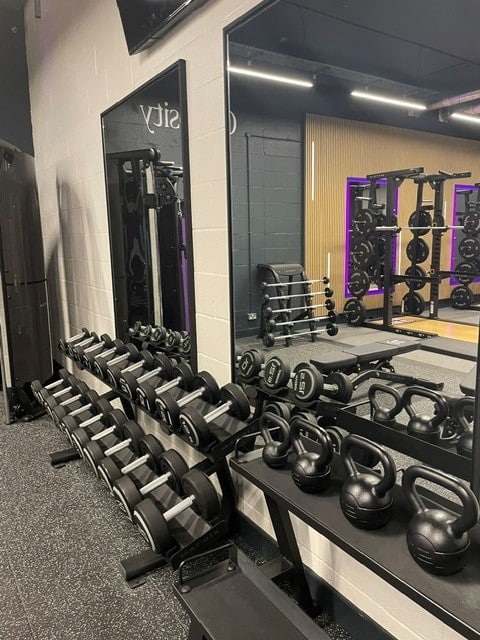
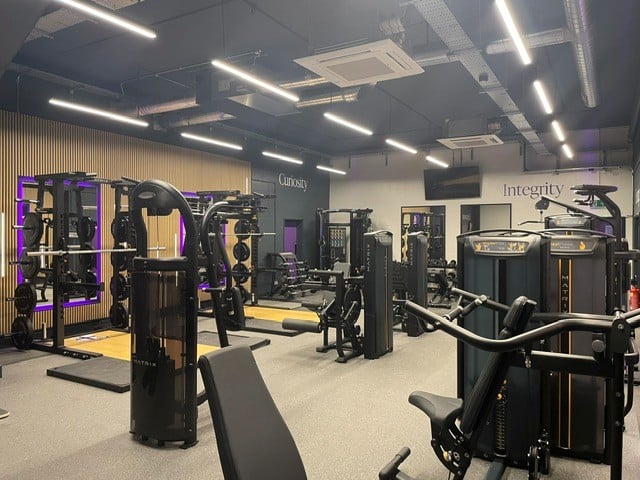
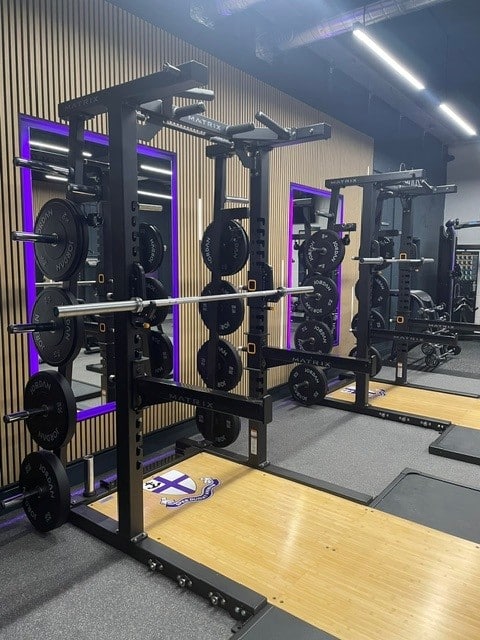
The Ian Knapp Fitness Suite is now fully operational and will soon be open to parents, staff and the local community as well as the pupils. The magnificent new facility has been funded by generous donations from parents, staff, Old Kimboltonians and governors as well as the school’s capital projects budget.
The names of all the donors will be etched into the glass wall, in time for the official opening celebration in November. If you would like your family name to be lit up in purple, along with the other donors, you have until Friday 16 October to donate here:
Home learning adjustments
Our pupil and parent survey about home learning highlighted several important themes, which we have addressed below. Together, these changes are designed to strengthen the partnership between home and school and ensure that home learning remains a purposeful, effective and valuable part of every pupil’s education.
Clearer purpose and expectations
Every task set through Microsoft Teams will now be identified according to its learning purpose, whether that is practising new skills, revising prior learning, preparing for future lessons, applying knowledge in new contexts or extending understanding. This is so that pupils and parents understand its purpose.
Greater transparency for pupils
Home learning tasks via Teams will also indicate the level of AI use permitted and the type of feedback pupils can expect. This will help pupils understand not only what they are doing, but why they are doing it and how it will support their progress.
Preparing for learning
We will make greater use of pre-reading and other preparatory activities where appropriate, enabling pupils to arrive at lessons better equipped to engage with new ideas, richer discussion and deeper learning.
Consistency across the school
All home learning will continue to be set through Microsoft Teams, deadlines will be clear, tasks will be introduced in lessons, and teachers will continue to balance challenge, independence and workload appropriately.
Music Diary: Autumn Term 2026

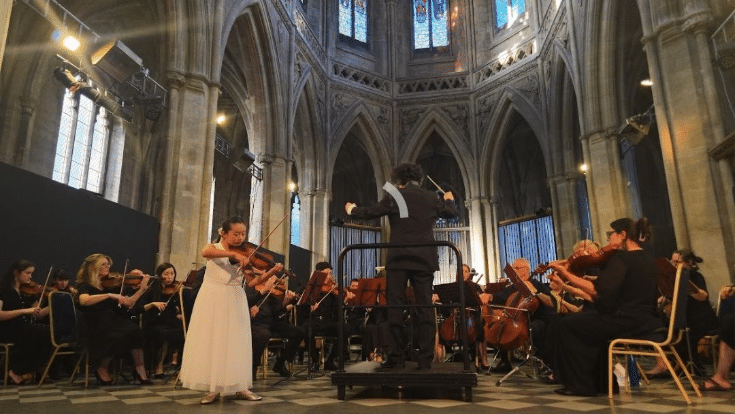
From concerts and recitals to Dear Evan Hansen, festive performances and the School Choir’s Christmas tour to the Netherlands, there is plenty to look forward to from our Senior School musicians this term.
Mr Gibbs, Director of Music, has brought together all the key dates, performance details and ensemble rehearsal times in the Autumn Term Music Diary.
Driving to school policy – supporting safer young drivers
We have recently updated our Driving to School Policy to strengthen our expectations around safe and responsible driving, both on the School site and beyond.
Learning to drive and gaining independence is an exciting milestone for our Sixth Form pupils, but it also brings significant responsibility. National road safety data highlights the particular risks faced by young drivers, especially when driving at night, on rural roads or with friends as passengers.
Alongside the updated policy, we are dedicating significant time within our Lower and Upper Sixth Citizenship programme to road safety. Pupils will explore the risks and consequences associated with unsafe driving and consider how they can make responsible decisions as new and developing drivers.
Technology such as telematics and ‘black box’ insurance can be helpful, but it cannot replace good judgement, experience and an understanding of risk. We therefore see this as an important partnership between pupils, parents and the School.
Parents can play a particularly valuable role by remaining involved after their child has passed their test – talking openly about safe driving, setting expectations and helping young drivers gradually build experience in more challenging situations.
We would encourage parents of current and future young drivers to read the updated Driving to School Policy and the accompanying young driver safety resources, which contain useful information and practical guidance for families.
Our aim is simple: to help our young people enjoy the independence that driving brings while understanding the responsibility they have for their own safety, their passengers and everyone else on the road.
Senior School and Sixth Form Open Morning

Our Senior School and Sixth Form Open Morning takes place this Saturday, 19 September, from 10.00am–12.30pm.
Visitors will have the opportunity to meet our school leaders, teachers and current families, explore our facilities and discover more about the Kimbolton experience.
If you know any families who may be interested in joining our school community, please do share the details with them.
Macmillan Coffee Morning

Join us for our Macmillan Coffee Morning on Friday 25 September, from 8.30–10.30am in the Hunter Hall at Kimbolton Prep.
Please bring along or buy some delicious cakes and treats, catch up with other members of the Kimbolton community and help us raise money for Macmillan Cancer Support.
We look forward to seeing you there—and enjoying plenty of cake for a very good cause!
KSPA Annual Review Meeting
All parents are warmly invited to attend the KSPA Annual Review Meeting on Monday 5 October 2026 at 7.00pm.
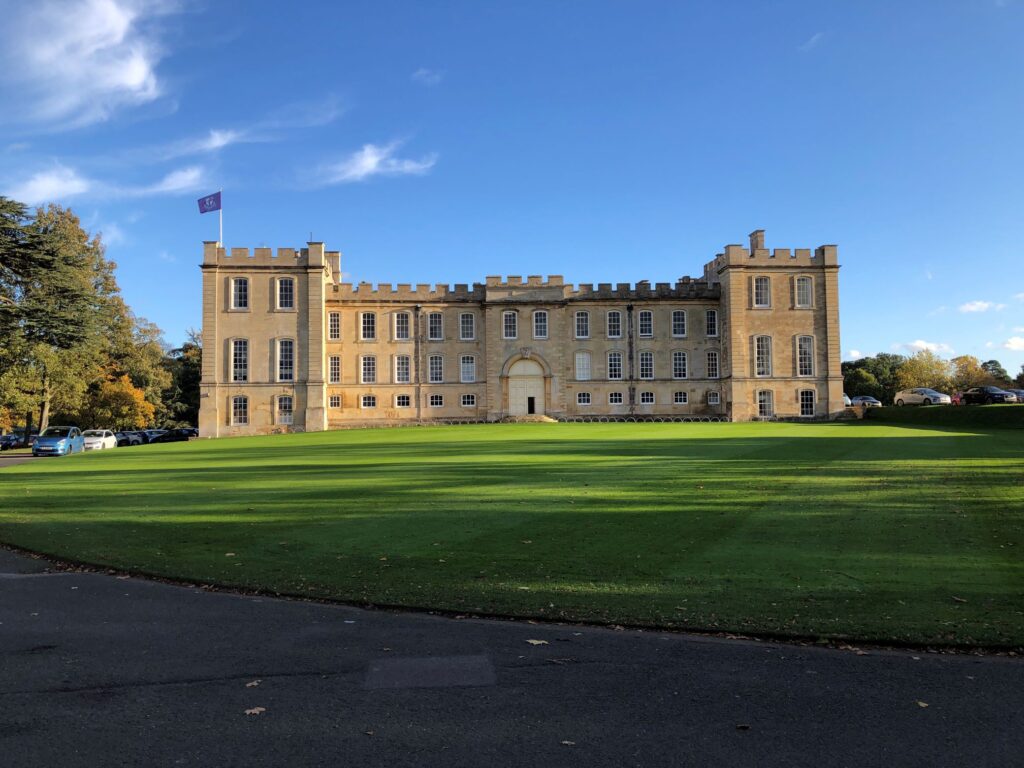
The meeting will take place in the White Hall, Kimbolton Castle. Please enter the Castle via the Portico steps.
We hope you will be able to join us.
Splaat Photo – information for families

Since introducing Splaat Photo, we have received several helpful questions from parents about how the service works, including photography arrangements, registration, facial matching, purchasing options, and data protection.
We have therefore prepared a detailed FAQ to explain the purpose of the service, the safeguards in place and the choices available to families. We hope this provides useful clarification, but if you have any further questions, please contact Jeanette Ariano, Director of External Relations.